Overview
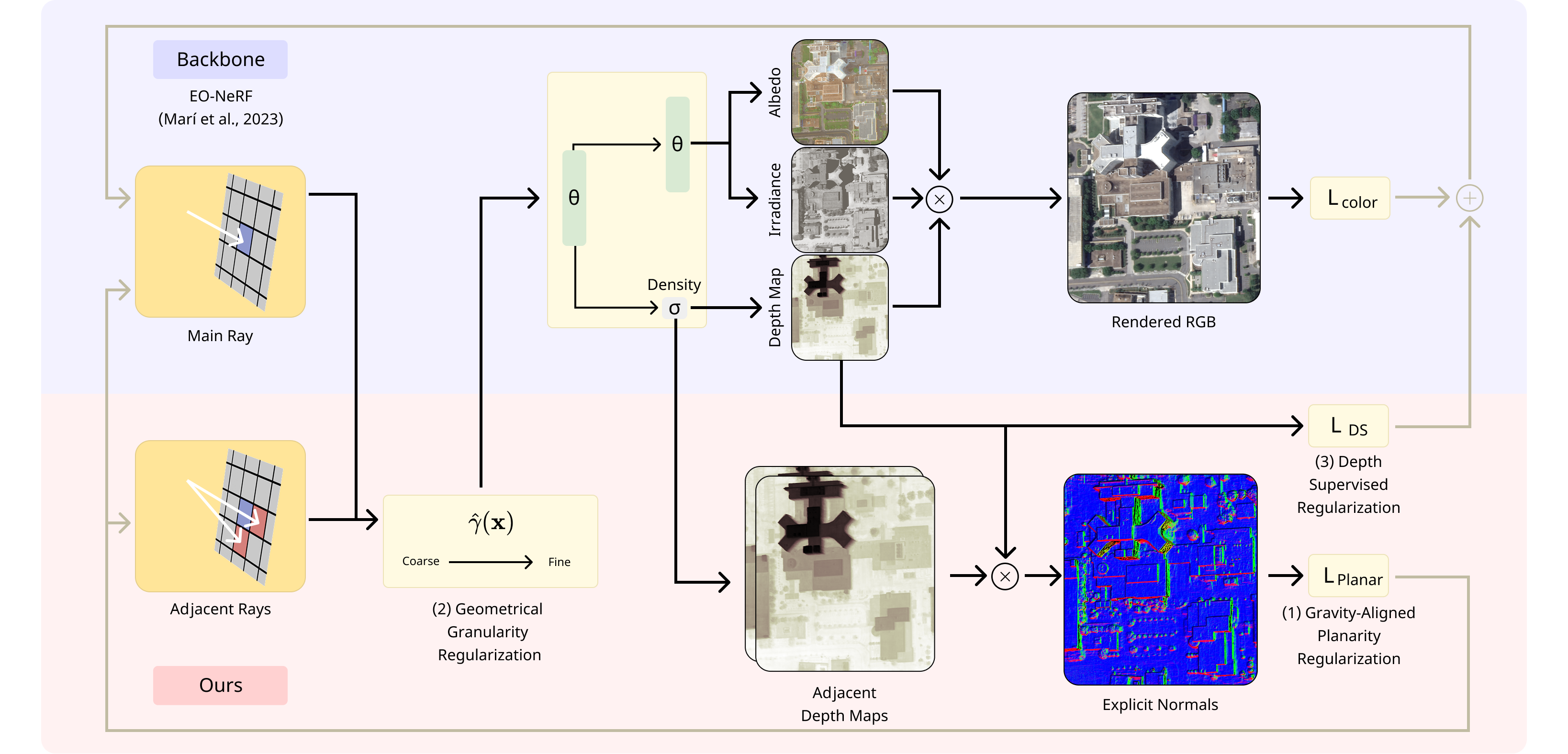
We augment a satellite-domain–adapted backbone (EO-NeRF, Marı́ et al. (2023)) with three model-agnostic regularizers: (1) Gravity-Aligned Planarity Regularization: estimate explicit normals by sampling two adjacent rays per training ray and evaluating depth only; align normals with the axis of gravity to mitigate overfitting and enable cross-ray smoothing. (2) Geometrical Granularity Regularization: coarse-to-fine masking of the input frequency encoding. (3) Depth-Supervised Regularization: depth constraints from a sparse 3D point cloud obtained from a Bundle Adjustment preprocessing step.
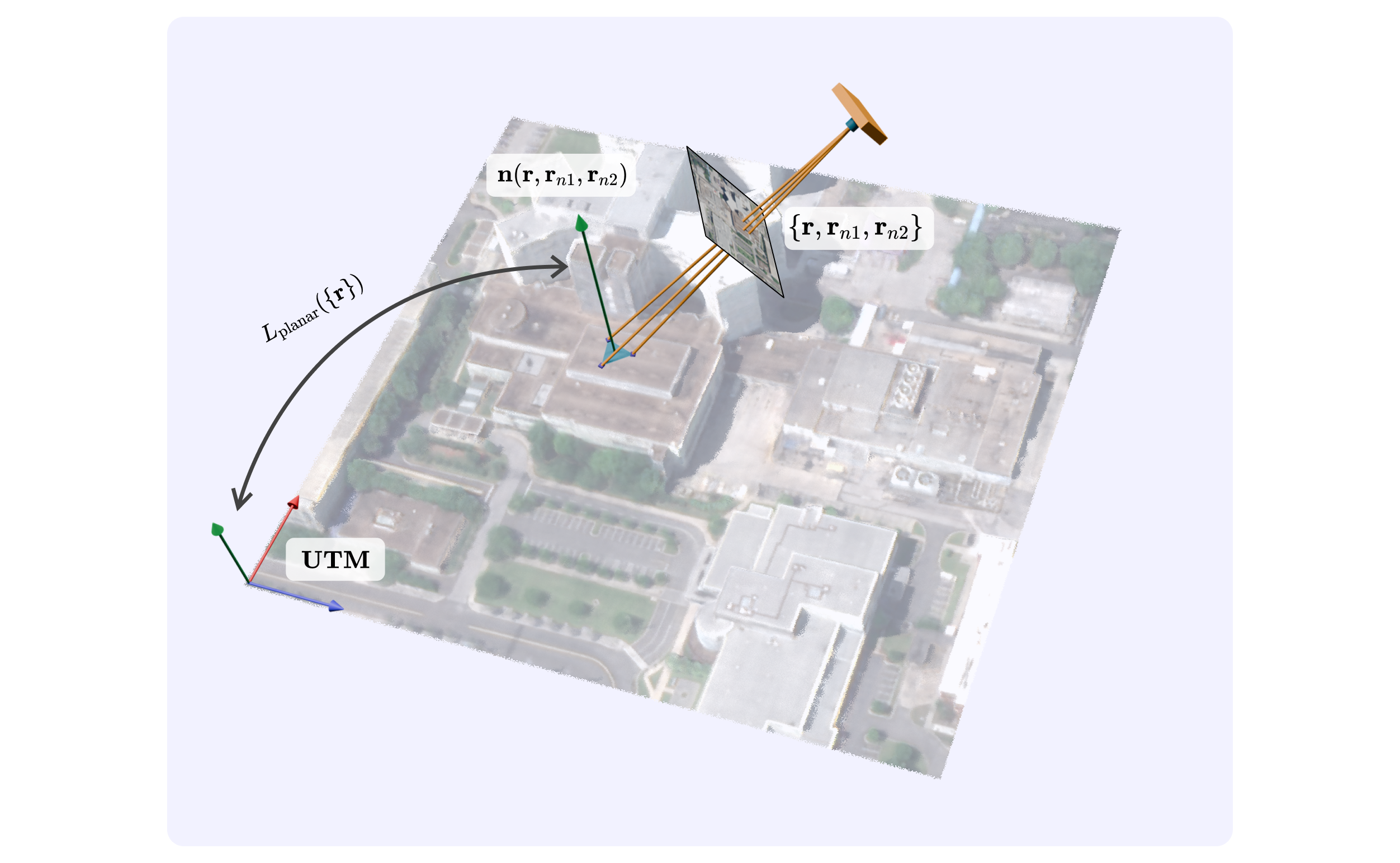
Gravity-Aligned Planarity Regularization: A local plane is estimated from three surface points on adjacent rays; its normal is constrained to align with the axis of gravity (approximated as UTM-up).
Results
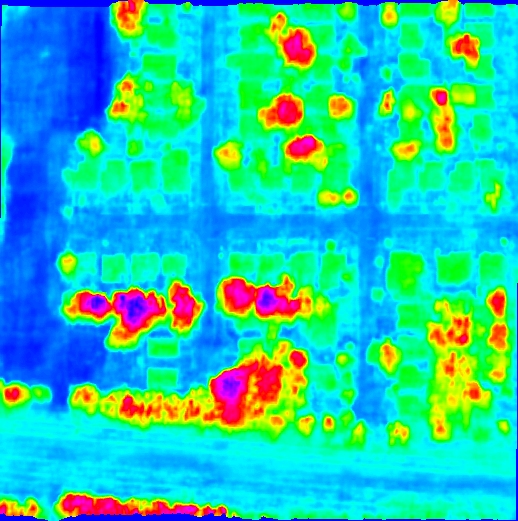
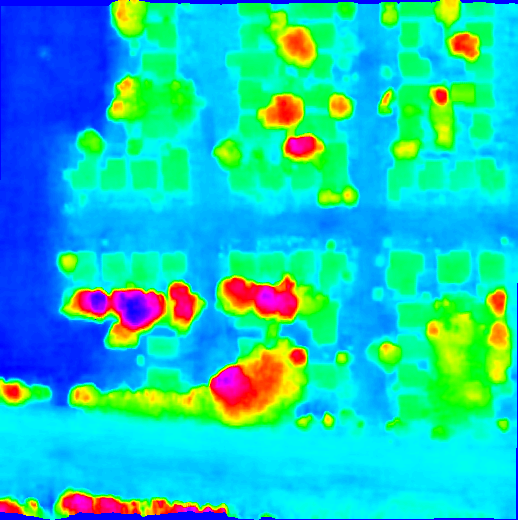
JAX 004
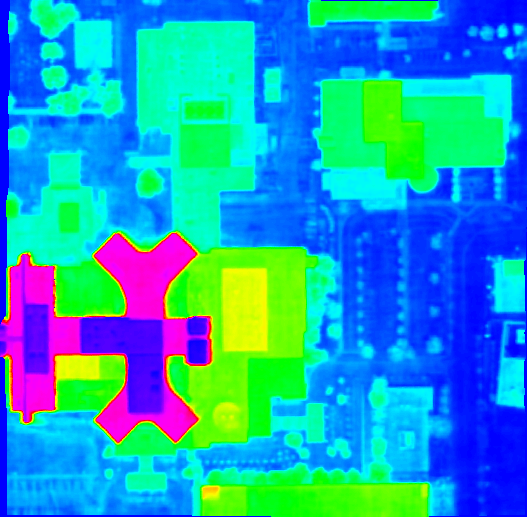
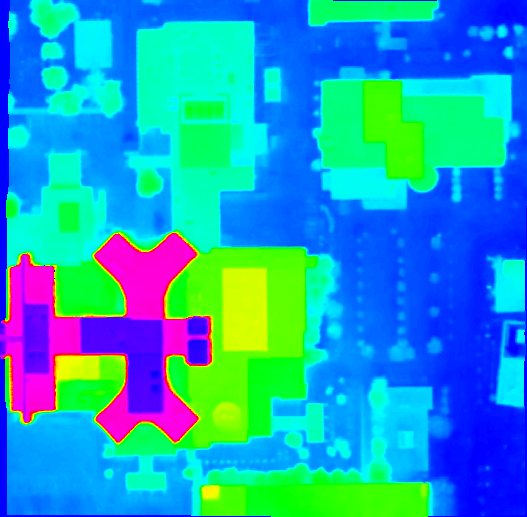
JAX 068
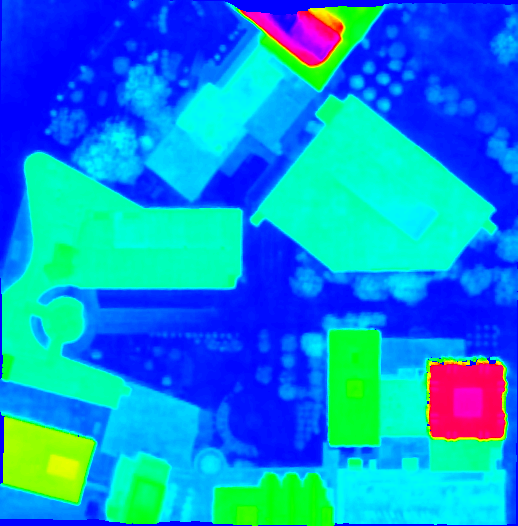
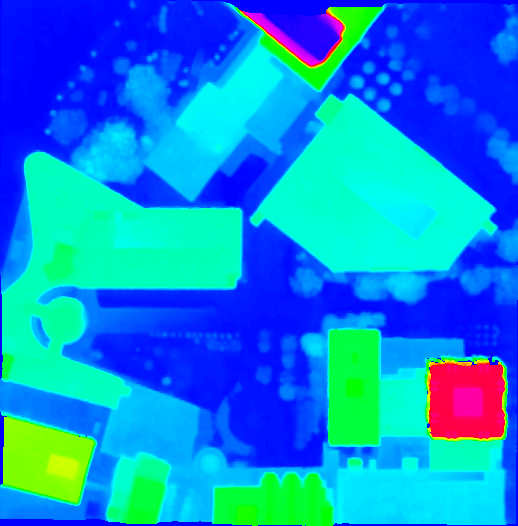
JAX 214
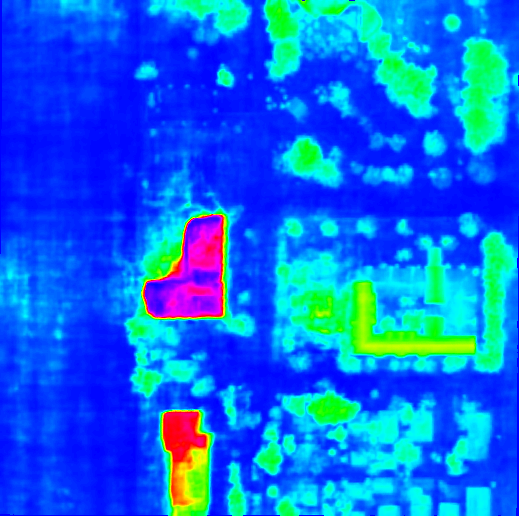
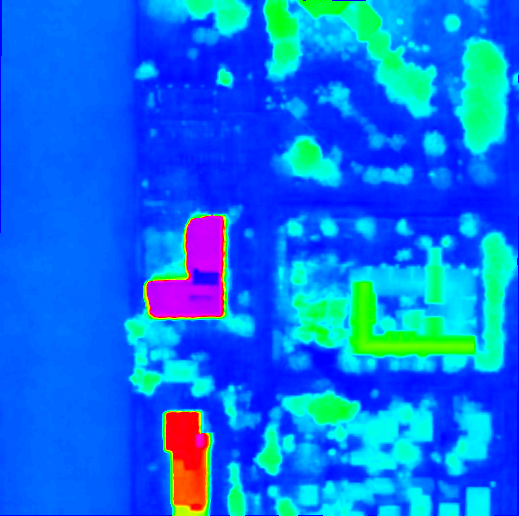
JAX 260
BibTeX
@misc{wagner2026satgeonerf,
  title={SatGeo-NeRF: Geometrically Regularized NeRF for Satellite Imagery},
  author={Valentin Wagner and Sebastian Bullinger and Michael Arens and Rainer Stiefelhagen},
  year={2026},
  eprint={2603.21931},
  archivePrefix={arXiv},
  primaryClass={cs.CV},
  url={https://arxiv.org/abs/2603.21931},
}